

Public and community engagement with research opportunities
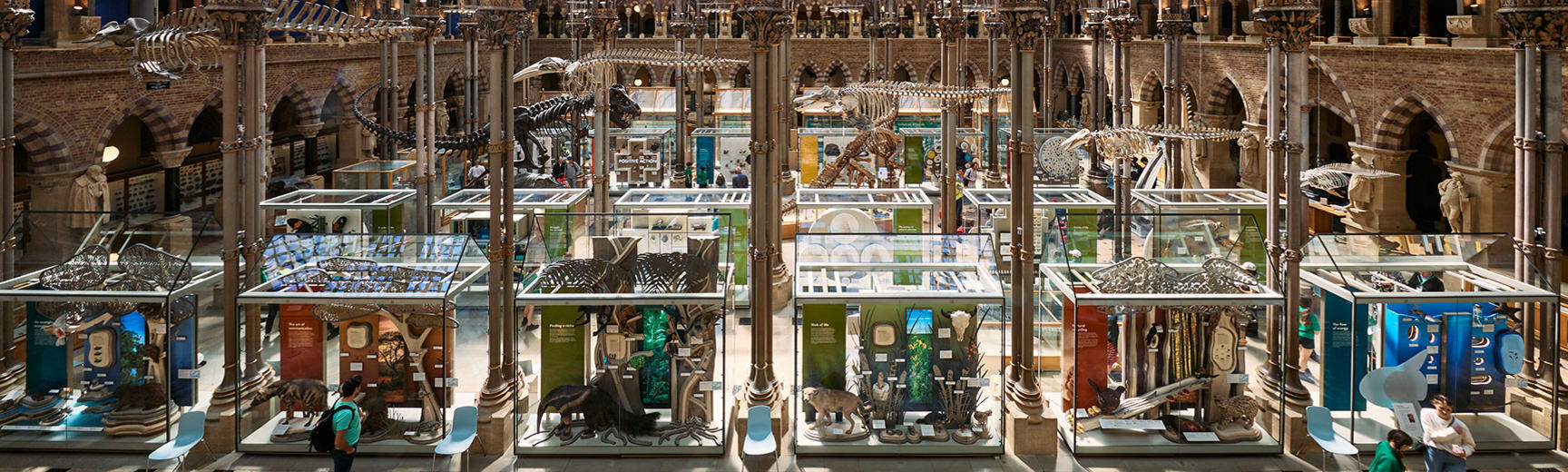
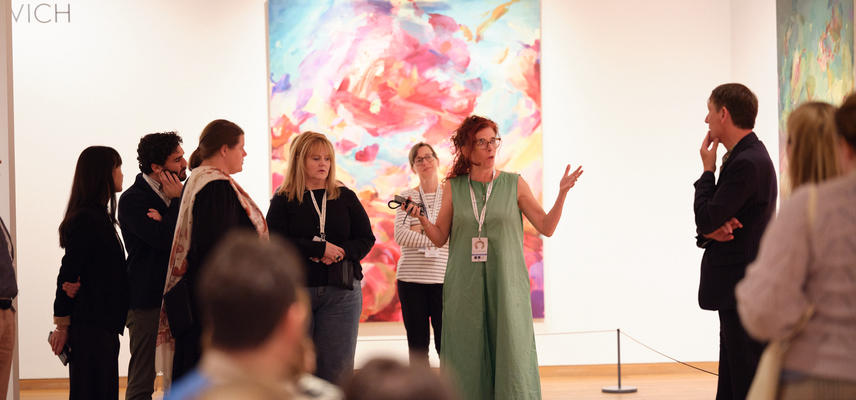
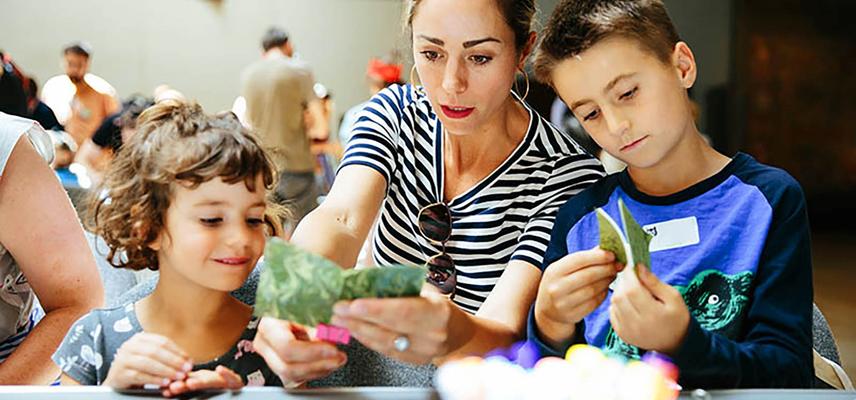
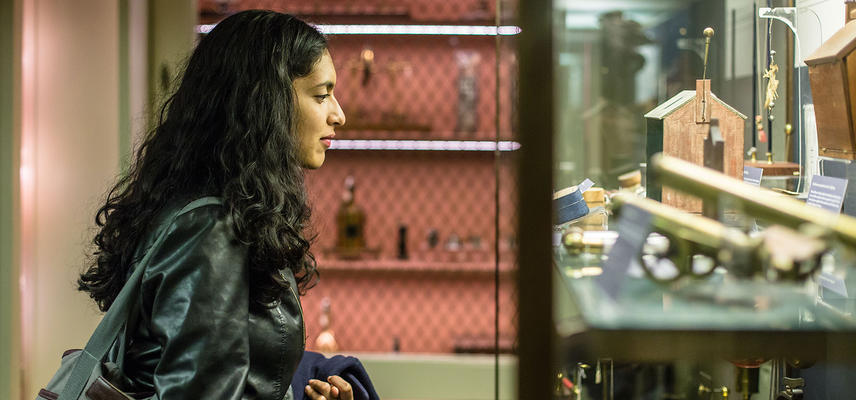

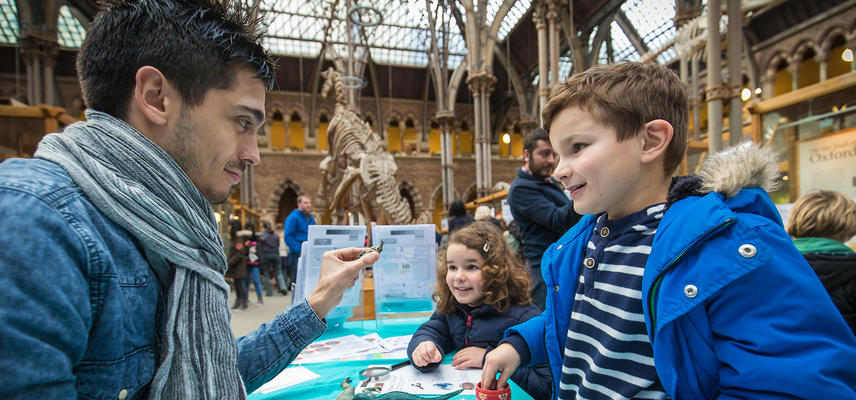
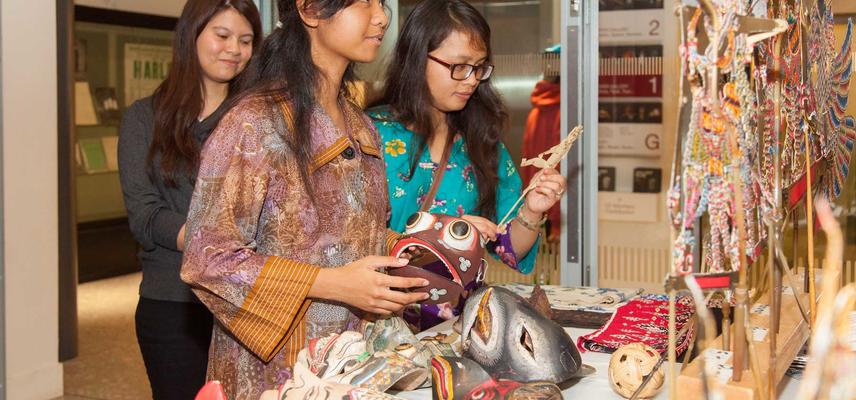
From fairs to film screenings, comedy nights to gameshows, pop-up stalls in shopping centres and at festivals, GLAM can work with researchers to develop innovative and impactful bespoke programmes of activities and events
Oxford University Gardens, Libraries and Museums (GLAM) are keen to explore new types of engagement activity with researchers. Their public and community engagement teams develop and facilitate additional bespoke public and community engagement with research (PCER) events and activities alongside their regular programming.
Events and activities can take place in GLAM venues or out and about in the community, depending on what is planned and with whom. There is also scope for cross-collection PCER events and activities that span more than one GLAM institution.
Costs and timeframes are variable and depend on the scope of researchers’ ambition.
GLAM institutions are always open to new ideas and are keen to help researchers to develop and facilitate proposals. Contact the relevant teams to discuss ideas.
Example: African Community Connections: A Celebration (Pitt Rivers Museum)
Co-creation via community partnerships is a way for researchers to work with experienced GLAM public and community engagement teams to engage in a sustained, impactful manner with underrepresented audiences
Co-creation in a gardens, libraries and museums context is the practice of involving people in the making of anything that those institutions can produce. This could be object interpretation, displays and exhibitions, educational resources, artworks, websites, tours, events or even festivals. (See SHARE Museums East introductory guide to co-creating community projects for additional information.)
There will be many more possibilities than are listed below and there is also scope for cross-collection public and community engagement with research (PCER) activities that span more than one Oxford University Gardens, Libraries and Museums (GLAM) institution.
Example: Whose Science? Whose Story? research project (History of Science Museum)

Debates and discussions offer opportunities for researchers to create meaningful two-way dialogue between researchers and the audience
Many of Oxford University’s Gardens, Libraries and Museums (GLAM) have lecture theatres, particular galleries or spaces within the institution which can be used to host debates and discussions.
Panel discussions can complement particular exhibitions or displays or can focus on any aspect of the GLAM collections. They can be tailored toward a specific audience or open to the general public, allowing the researcher to engage with target groups.
Debates and discussions can also take place online and/or livestreaming may be available, hosted by the GLAM institution. Depending on the venue, talks may be saved as podcasts for posterity.
Costs can be variable, particularly if extras are required (e.g. drinks reception) – contact the relevant team to discuss.
In-person events often take place once the institution has closed for the day and may therefore incur additional staffing costs.
Example: Radical Hope, Critical Change (Pitt Rivers Museum)
Object-handling and other hands-on creative learning activities and demonstrations can offer excellent opportunities for researchers to communicate research with small groups of the public
Demonstrations and 'hands-on' activities usually take place during the institution's usual opening hours or to invited target groups. Such events allow researchers and the public to interact directly and offer opportunities for unique, high-impact engagements.
Showcase-style events such as science fairs are:
- multi-format and may involve informal talks, hand-on activities and demonstrations;
- usually aimed at a family audience;
- an opportunity to engage a broad public, disseminating research widely across a diverse audience through various media;
- an opportunity to test public and community engagement with research (PCER) models and approaches while engaging a large public audience.
There may be many more possibilities than are listed below, as well as opportunities for overlap between different PCER categories depending on the nature of the project. There is also scope for cross-collection PCER activities that span more than one Oxford University Gardens, Libraries and Museums (GLAM) institution.
Example: Printing and book arts at the Bodleian Libraries (Bodleian Libraries)
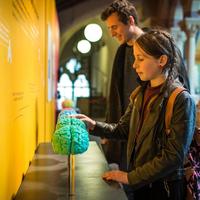
Exhibitions and displays are an obvious starting point for public and community engagement with research (PCER) activities
On-site exhibitions and displays provide opportunities for researchers to work with the multiple award-winning public and community engagement teams within Oxford University Gardens, Libraries and Museums (GLAM) institutions.
Exhibitions and displays can allow research to be presented in innovative ways, alongside objects from GLAM collections, loans from external organisations and interactive displays. Exhibitions usually have programming around them such as talks, tours and other events, allowing for other forms of engagement alongside the exhibition.
Larger exhibitions are usually but not always conceptualised in-house, and often involve working in collaboration with partners external to the GLAM institution in question. It is therefore advisable to contact with the relevant team at the institution at the earliest possible convenience.
A useful blog post about the logistics of putting on an exhibition in the History of Science Museum’s Special Exhibition Space illustrates how creating and curating a special exhibition can be a complex, varied and often long process.
Planning can be as long as five years in advance for exhibitions at GLAM institutions and costs can vary from a few thousand pounds to tens of thousands of pounds. Please be aware that GLAM institutions have full and busy programmes and it may not be possible to pick up activities that have already been fully developed or to deal with urgent requests. Ideally, activities should be co-created with GLAM from project conception and researchers should get in contact early so that we can work together to develop your ideas.
Example: Breaking Ground exhibition (Museum of Natural History)
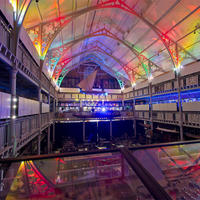
Late night events can be a relaxed and fun way to engage with the public
Late night events are held at regular intervals throughout the year across many of the Oxford University Gardens, Libraries and Museums (GLAM) venues. They are aimed at an adult and student audience and are a relaxed and fun way to engage with the public.
Multi-format events may contain a variety of different public and community engagement with research (PCER) activities, e.g. talks, hands-on demonstrations, etc. and may provide a good opportunity for researchers to experiment.
Late night events at the Museum of Natural History and the neighbouring Pitt Rivers Museum are often run in tandem, offering potential for collaborative cross-collection work.
Planning may be up to six months in advance but the multi-format nature of the events means that researchers can be added relatively late in the day. However, it is still advisable to get in touch with the institution in question in good time before the event to assist with planning.
Example: 'My Normal' Museum Takeover (Pitt Rivers Museum)
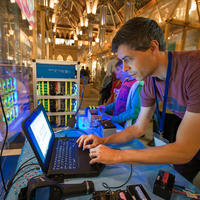
Ongoing developments in digital technology allow audiences to engage with and be inspired by GLAM collections from home
Digital engagement can take many forms but is often focused around making collections accessible online or using technology in a way which re-imagines the collections. Oxford University Gardens, Libraries and Museums (GLAM) Digital Strategy aims to embrace the opportunities offered by digital to democratise access to the collections, thus eliminating geographic, cultural and economic boundaries.
The Covid-19 pandemic was a driver of digital innovation across the cultural sector and much new content has been created and new dissemination activities developed. These include: online lectures, online tours and trails via digital guides/interactives, many of which can be accessed worldwide to a global audience.
There may be many more possibilities than are listed below, as well as opportunities for overlap depending on the nature of the project. There is also scope for cross-collection public and community engagement with research (PCER) activities that span more than one GLAM institution.
All GLAM institutions have their own social media accounts, potentially allowing researchers access to tens of thousands of people around the world. Researchers should contact the relevant public and community engagement teams for details of how to get involved.
Example: More Than A Dodo blog (Museum of Natural History)
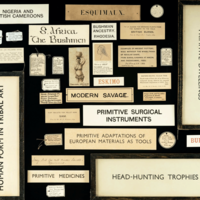
(Re)interpreting GLAM collections ensures that they remain engaging and relevant to our many and varied communities
Oxford University's Gardens, Libraries and Museums (GLAM) contain some of the world's most significant collections. Part of GLAM’s vision for the future is that the GLAM institutions continue to be an authoritative place to which people increasingly turn for insight into cultural and natural heritage – present and past.
A major focus within the museum and heritage sector at present is challenging perceptions and demonstrating the vital role in society of such institutions. This can partly be achieved through cutting-edge research and teaching and ensuring evidence-based stewardship, collections care, documentation and interpretation, and sometimes re-interpretation of collections via research and/or co-creation with communities. Such work may be relatively simple or more complex, from adding a new label in a cabinet to creating new interpretation boards or displays around decolonisation, for example.
(Re)interpretation of GLAM’s collections is something that might be done as part of another piece of public and community engagement with research – e.g. part of a special exhibition or display, or part of co-curation project – but not usually as a public and community engagement with research (PCER) activity in its own right. However, it has been treated as a separate category here to highlight to researchers the potential opportunity for public and community engagement with research.
Activities can be tailored to suit different audiences. (Re)interpretation of collections can be appropriate/useful for all audiences, and may be particularly appropriate/useful for:
• Community groups and special interest groups
• Underrepresented audiences
Please note that the banner image on this page features examples of problematic old labels from the Pitt Rivers Museum as part of their Labelling Matters project which is reviewing the Museum's use of language for the 21st century.
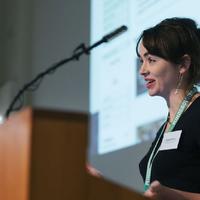
Lectures and talks can be a means of raising public awareness about a particular topic or field of research and are usually one-way interactions
Many of Oxford University’s Gardens, Libraries and Museums (GLAM) have lecture theatres, particular galleries or spaces which can be used to host formal lectures and talks, offering opportunities for researchers to share their work.
Public talks may focus on items and research associated with major exhibitions and collections or programming themes, or are stand-alone. These type of events can be tailored toward a specific audience or open to the general public, allowing the researcher to engage with target groups.
Researchers may propose alternative formats to talk to public audiences, e.g. gallery talks, pop-up talks, interactive talks, performance-enhanced talks, etc.
Talks can also take place online and/or livestreaming may be available, hosted by the GLAM institution. Depending on the venue, talks may be saved as podcasts for posterity. See the Online engagement section of the GLAM PCER Toolkit for further information.
Costs can be variable, particularly if extras are required (e.g. drinks reception) – contact the relevant team to discuss. In-person events often take place once the institution has closed for the day and may therefore incur additional staffing costs.
Example: Centre for the Study of the Book talks (Bodleian Libraries)
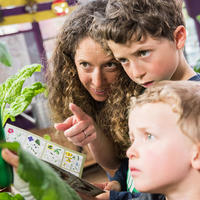
Trails and tours encourage engagement with the real objects in the GLAM institutions, improving both learning and impact
Trails use Oxford University Gardens, Libraries and Museums’ (GLAM) permanent displays as a tool to communicate current research. Using objects on display to illustrate research concepts, trails present an accessible way for researchers to share their work with a wide public. Trails allow for independent exploration at visitors’ own pace.
There may be scope for cross-collections trails which span more than one GLAM institution. For example, the GLAM-wide Museum of Climate Hope trail aims to encourage positive engagement with environmental change among young people and was created by researchers from the University's Environmental Change Institute (ECI) in collaboration with GLAM. Trails require advance planning with up to two years’ notice.
Researchers can develop research-themed guided in-person walks as part of GLAM institutions’ public education programmes. Front-of-house, audio and online tours of permanent displays and special exhibitions can help visitors understand particular aspects of the collections in more depth. Behind-the-scenes tours can enhance visitors' understanding of the work of researchers and GLAM staff by allowing them access to non-public parts of GLAM’s buildings.
Audio tours can enhance the on-site experience and can be undertaken independently. Tailored touch tours for people who are Blind or Partially Sighted are offered across GLAM.
Example: Plant Power! Stop the Superbugs trail (Oxford Botanic Garden and Arboretum)
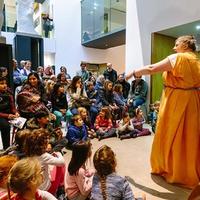
Each year Oxford University’s Gardens, Libraries and Museums (GLAM) deliver education sessions to over 100,000 school students and host students and researchers from around the world
Learning activities include support for formal learning from earlier years to a variety of different curriculum levels. Engagement activities range from provision of resources for independent use to direct engagement sessions within GLAM’s inspiring spaces.
Researchers may be able to feed in to these activities and resources by working closely with GLAM learning teams to develop new and existing content. Schools engagement can give researchers the chance to communicate with people who already have an interest in the subject.
Costs can be variable so contact the relevant team to discuss (see below for contact details).
Study days and school visits: Study days are designed to enrich and support delivery of the school curriculum across various key stages. They offer unique access to GLAM’s collections with curators and Oxford University academics. Study days could include university-style lectures and workshops, live virtual classes, exhibition visits, guided tours when linked to special exhibitions, hands-on practical sessions facilitated by academic researchers or museum staff, and collections up close.
Resources for independent use: Resources which support curriculum linked learning and play for use both at home and at school can include videos, quizzes, activities and games, which may be available as online and/or printable resources.
Example: Learning programme case studies (Ashmolean Museum)
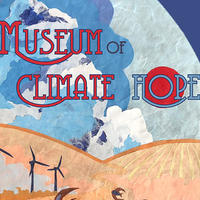
GLAM supports public and community engagement with research activities as diverse as its world-leading collections - there is plenty of scope for working across our institutions
Opportunities for researchers to develop GLAM-wide public and community engagement with research (PCER) activities include trails and multi-site exhibitions that span more than one Oxford University Gardens, Libraries and Museums (GLAM) institution, some examples of which are highlighted below. A cross-collection approach can be an opportunity to interrogate the GLAM collections by an over-arching theme or discipline.
For an initial chat about PCER opportunities with GLAM, particularly for activities spanning more than one GLAM institution, researchers may wish to contact the GLAM Research and Impact team (researchsupport@glam.ox.ac.uk).
There are many possibilities and opportunities for working across GLAM’s collections and venues depending on the nature of the project so researchers should get in touch.
Example: Museum of Climate Hope (GLAM-wide)

