

Explore GLAM’s public and community engagement with research
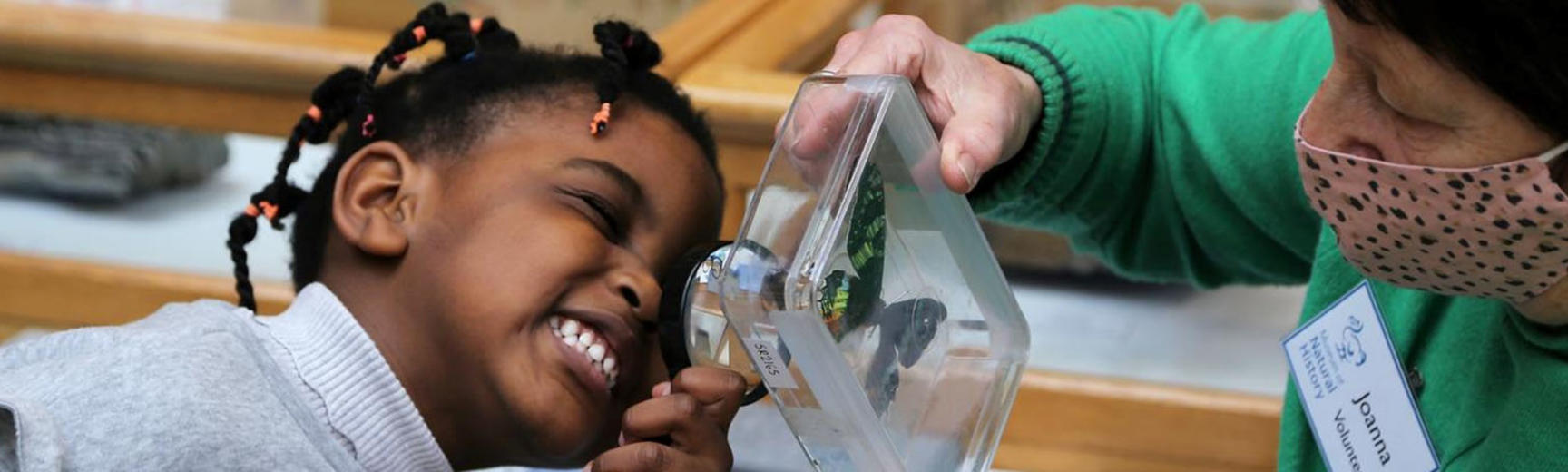
Keep on reading to be inspired by opportunities for public and community engagement with research (PCER) activities which are as diverse as GLAM's world-leading collections.
Below are links to PCER taking place in the six GLAM institutions, as well as video case studies, links to REF 2021 case studies, and information about the participatory research taking place in GLAM.
To find out more or to work with us on public and community engagement with research activity, get in touch via the contact list on GLAM's main PCER webpage.
PCER in GLAM institutions
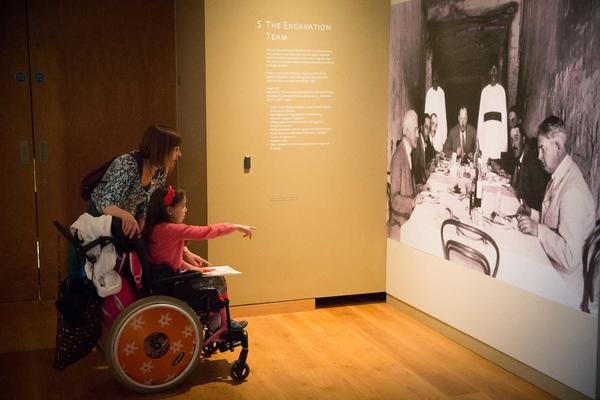
Ashmolean Museum
Ashmolean Museum
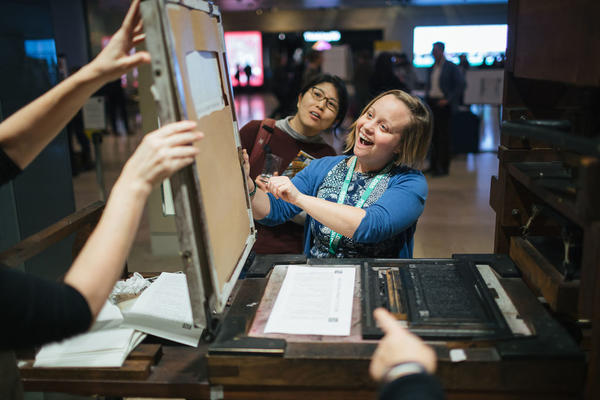
Bodleian Libraries
Bodleian Libraries
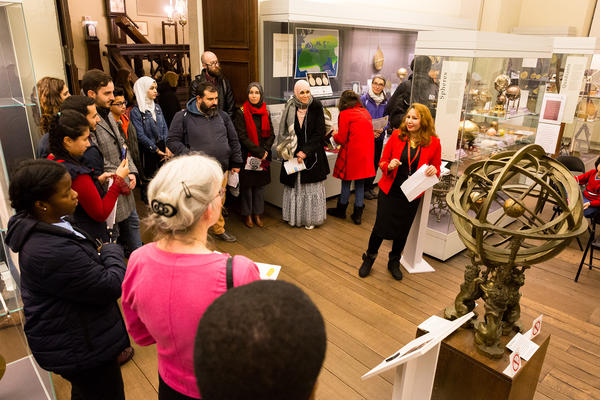
History of Science Museum
History of Science Museum
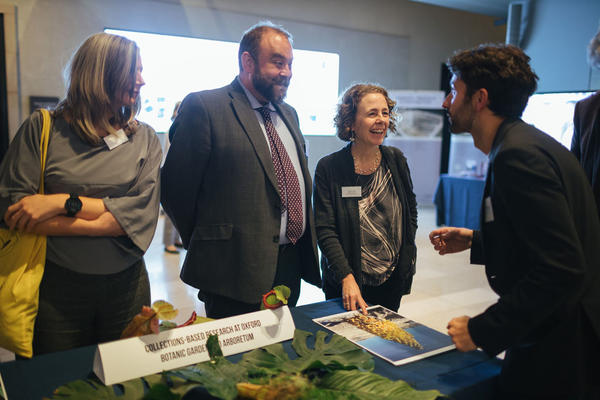
Oxford Botanic Garden and Arboretum
Oxford Botanic Garden and Arboretum

Oxford University Museum of Natural History
Oxford University Museum of Natural History

Pitt Rivers Museum
Pitt Rivers Museum
Video case studies
https://www.youtube.com/embed/t9kfhpdQKCQ
The Decolonisation and the Anti-Imperial Materialities Project, Pitt Rivers Museum
Bacterial World, Oxford University Museum of Natural History
Dimensions: The Mathematics of Symmetry and Space, Ashmolean Museum
Picturing Parkinson's, Ashmolean Museum
REF 2021 impact case studies
The Research Excellence Framework (REF) is the UK's system for assessing the excellence of research in UK higher education providers (HEIs). In the REF 2021, impact is defined as an effect on, change or benefit to the economy, society, culture, public policy or services, health, the environment or quality of life, beyond academia. Each HEI submitted a selection of impact case studies for assessment in the REF. An impact case study is a five-page document, describing the impact of research undertaken within the submitting unit. It also contains information about the research that underpins the impact that took place.
Click on the links below to read the REF 2021 impact case studies which were led by GLAM or for which GLAM institutions were contributors, as well as the Oxford University Unit of Assessment/Department to which it was submitted.
Activating Art for Tibetan (Self-)Representation and Collaboration in UK Museums
Pitt Rivers Museum (lead)
Activating Art for Tibetan (Self-)Representation and Collaboration in UK Museums
Anthropology
Ada Lovelace’s mathematics: catalysing creative collaborations and commemoration
Bodleian (contributor)
Ada Lovelace’s mathematics: catalysing creative collaborations and commemoration
Mathematical Sciences
Archeox: Developing archaeological understanding and heritage capacity in the East Oxford community
Pitt Rivers Museum (contributor)
Archeox: Developing archaeological understanding and heritage capacity in the East Oxford community
Archaeology
Ancient Art and Architecture: Cultural Heritage Preservation, Education and Community Engagement
Bodleian Libraries (contributor)
Ancient Art and Architecture: Cultural Heritage Preservation, Education and Community Engagement
Classics
Classics in Communities: Improving collaboration for Classics education in primary and secondary schools, nationally and internationally; bridging the gap between teaching, learning, and policy
Ashmolean Museum (contributor)
Classics in Communities: Improving collaboration for Classics education in primary and secondary schools, nationally and internationally; bridging the gap between teaching, learning, and policy
Classics
Coin Hoards of the Roman Empire: the digital preservation of transnational heritage
Ashmolean Museum (lead)
Coin Hoards of the Roman Empire: the digital preservation of transnational heritage
Classics
Early Manuscript Design: enhancing public appreciation of medieval manuscript materials and design, and inspiring new works of art
Ashmolean / Bodleian (contributors)
Early Manuscript Design: enhancing public appreciation of medieval manuscript materials and design, and inspiring new works of art
English Language and Literature
Enabling self-expression and cultural integration of immigrant children through poetic exploration of multilingualism
Bodleian Libraries (contributor)
Enabling self-expression and cultural integration of immigrant children through poetic exploration of multilingualism
English Language and Literature
Enhancing cultural engagement with Shakespeare's legacy and enabling new theatrical productions
Bodleian Libraries (contributor)
Enhancing cultural engagement with Shakespeare's legacy and enabling new theatrical productions
English Language and Literature
Enhancing public understanding of the cultural significance of trees, and assisting preservation of trees and woodlands
Oxford Botanic Garden (contributor)
Enhancing public understanding of the cultural significance of trees, and assisting preservation of trees and woodlands
English Language and Literature
Exploring LGBTQ+ Histories Across World Cultures Through Museum Objects: changing museum practice and contributing to intersectional LGBTQ+ representation and culture
Ashmolean Museum (contributor)
Exploring LGBTQ+ Histories Across World Cultures Through Museum Objects: changing museum practice and contributing to intersectional LGBTQ+ representation and culture
Classics
First Animals in the 21st Century: Public Engagement with Deep-Time Research
Museum of Natural History (lead)
First Animals in the 21st Century: Public Engagement with Deep-Time Research
Earth Systems and Environmental Sciences
Impact of the exhibition Raphael: The Drawings on public understanding and behaviour, and on professional practice
Ashmolean Museum (lead)
Impact of the exhibition Raphael: The Drawings on public understanding and behaviour, and on professional practice
History
Improving cultural understanding of Victorian ‘diseases of modernity’ and stimulating critical, artistic and medical insights into contemporary parallels
History of Science Museum (contributor)
Improving cultural understanding of Victorian ‘diseases of modernity’ and stimulating critical, artistic and medical insights into contemporary parallels
English Language and Literature
Preserving and Revitalising Endangered Languages in Europe and Asia
Ashmolean/Bodleian (contributor)
Preserving and Revitalising Endangered Languages in Europe and Asia
Linguistics
Promoting knowledge of art and religion in late antiquity: Empires of Faith
Ashmolean Museum (contributor)
Promoting knowledge of art and religion in late antiquity: Empires of Faith
Classics
Rediscovering Ancient Greek Music: researching ancient music to inform practice
Ashmolean (contributor)
Rediscovering Ancient Greek Music: researching ancient music to inform practice
Classics
Shifting Perceptions of Islam and the Occult through Art and Material Culture: Social, Cultural and Economic Impact
Ashmolean Museum (lead)
Shifting Perceptions of Islam and the Occult through Art and Material Culture: Social, Cultural and Economic Impact
Area Studies
‘Storming Utopia’: an ongoing experiment in diversity, creativity, and community
Ashmolean Museum (contributor)
‘Storming Utopia’: an ongoing experiment in diversity, creativity, and community
Modern Languages
Stravinsky: Myths and Rituals. Reimaging Stravinsky’s music for artistic professionals and engaging new audiences
Bodleian Libraries (contributor)
Stravinsky: Myths and Rituals. Reimaging Stravinsky’s music for artistic professionals and engaging new audiences
Music, Drama, Dance, Performing Arts, Film
Translating, Printing, Singing: Creative Engagement with the German Reformation
Bodleian Libraries (contributor)
Translating, Printing, Singing: Creative Engagement with the German Reformation
Modern Languages
Valuing Creativity in Multilingualism, Translation and Language Learning
Bodleian Libraries (contributor)
Valuing Creativity in Multilingualism, Translation and Language Learning
Modern Languages
Participatory research
Research England has given Participatory Research Funding (PRF) to Oxford University since 2021.
The Participatory Research Fund (PRF) aims to strengthen research outcomes by supporting projects in which researchers and non-academic partners work together to co-create knowledge, whilst sharing power and responsibility. Partners can include organisations, creative practitioners, and communities of interest, identity and/or place.
Research England’s definition of participatory research:
Participatory or co-produced research strengthens research outcomes by involving the communities and users of research, better recognising their experience, needs and preferences, and giving greater agency to communities to implement findings.
In GLAM, the PRF has been used to support:
- Projects that use innovative models and methodologies for participatory research. These could include a) pilot projects that test participatory approaches, b) projects that build upon an existing participatory project;
- Public engagement with research activities that use a participatory methodology and/or are related to participatory research.
- Global Health Multaka-Oxford Participatory Research - working with migrants and asylum seekers to create digital outputs for the History of Science Museum's online collections database
- Water and Wildlife Activity Day at Oxford Botanic Garden (Museum of Natural History)
- Creative collaborative engagement with hidden queer histories in Pitt Rivers Museum archive: film screenings + discussions of 'Seasons of Longing'
- Afrika Taruwa (pilot): workshop + public event (The Gathering Place) for UK-based Nigerian creatives to engage with the Pitt Rivers Museum's West African collections. Taruwa at the Pitt Rivers Museum [YouTube]
- Focus group to give insight as to how the volunteers of Multaka-Oxford were engaging with the project, what they found beneficial, and what they would like to be improved (Pitt Rivers Museum / History of Science Museum)
- MistleGO! Citizen Science mistletoe project (Oxford Botanic Garden & Arboretum)
- Our Water Future, a pop-up exhibition resulting from a collaboration between OUMNH and REACH, related to Fair Water? exhibition (Museum of Natural History)
- Participatory element of the Taking Care project (Pitt Rivers Museum)
- Participatory workshop on ‘Troubling Standards: a social history of measuring in South Asia’ for South Asian diaspora community members in collaboration with Birmingham Museums Trust (History of Science Museum)
- Collaborative pilot project with Botanic Gardens Conservation International trying to get people to lower the carbon footprint of their weekly food intake (Oxford Botanic Garden & Arboretum)
- Collaborative research and storytelling around the objects at the Pitt Rivers Museum highlighting Chinese Zodiac Animals through toys, children’s clothing and folk art (Pitt Rivers Museum)
- The Decolonisation and the Anti-Imperial Materialities Project (Pitt Rivers Museum)
- Public engagement with research weekend at the Oxford City Farm as part of the AHRC-NERC funded Activating the Archive project (Pitt Rivers Museum)
- Extension of Radical Hope, Critical Change programme (Pitt Rivers Museum)

